
Last updated November 22, 2026
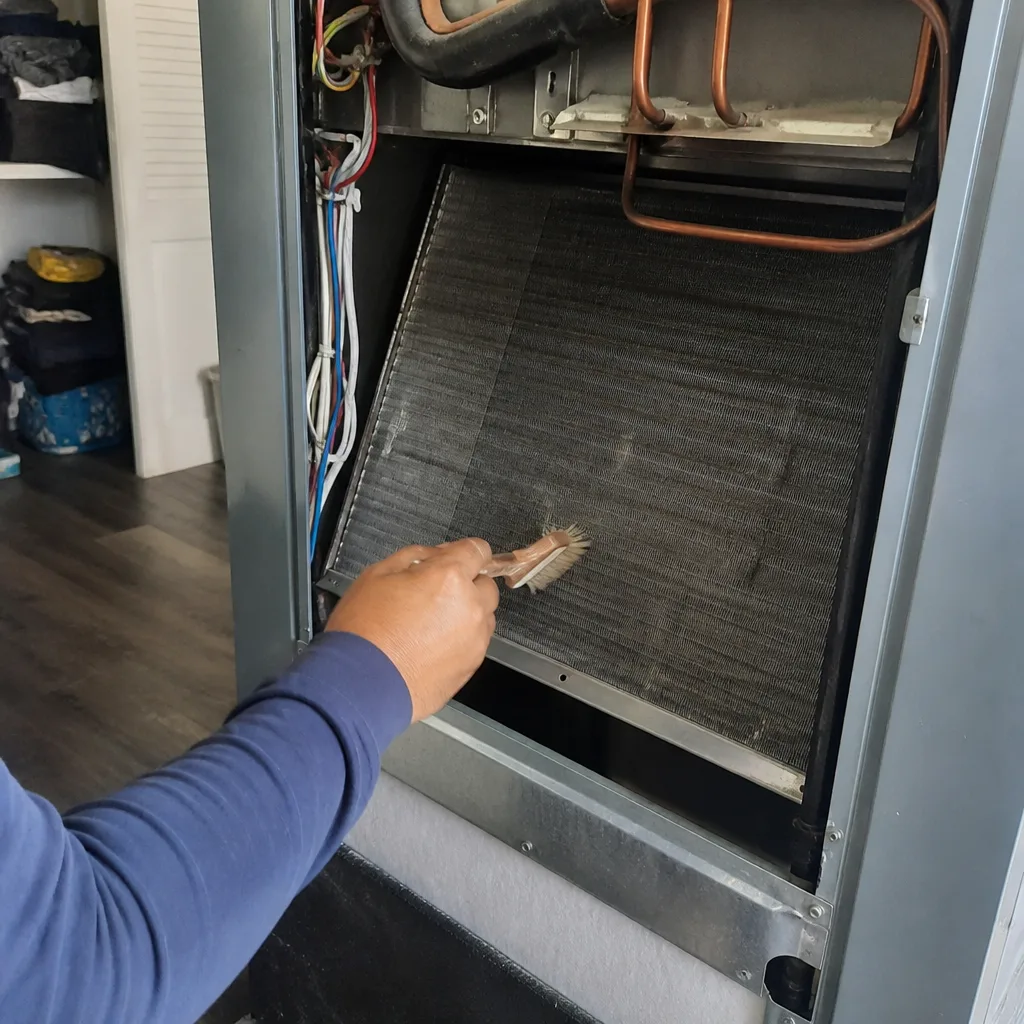
 Whole-home duct cleaning
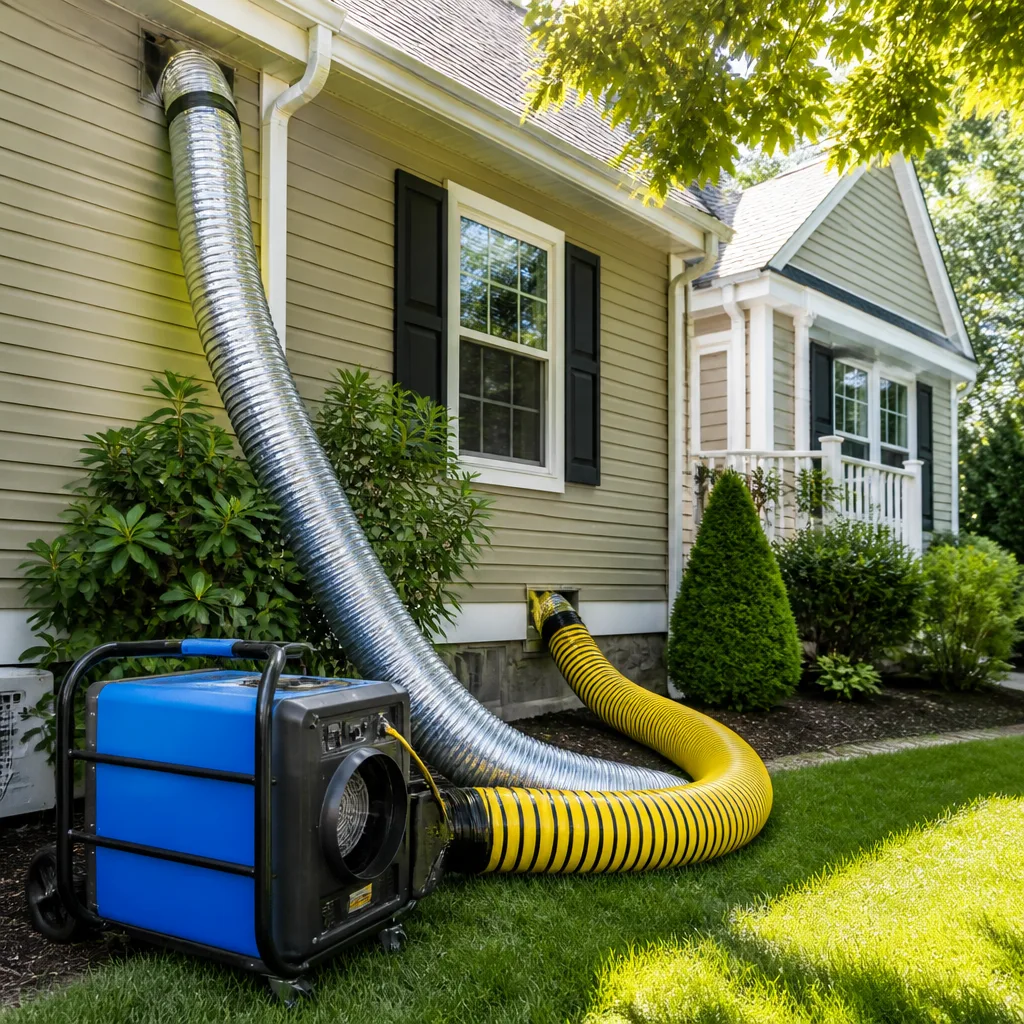
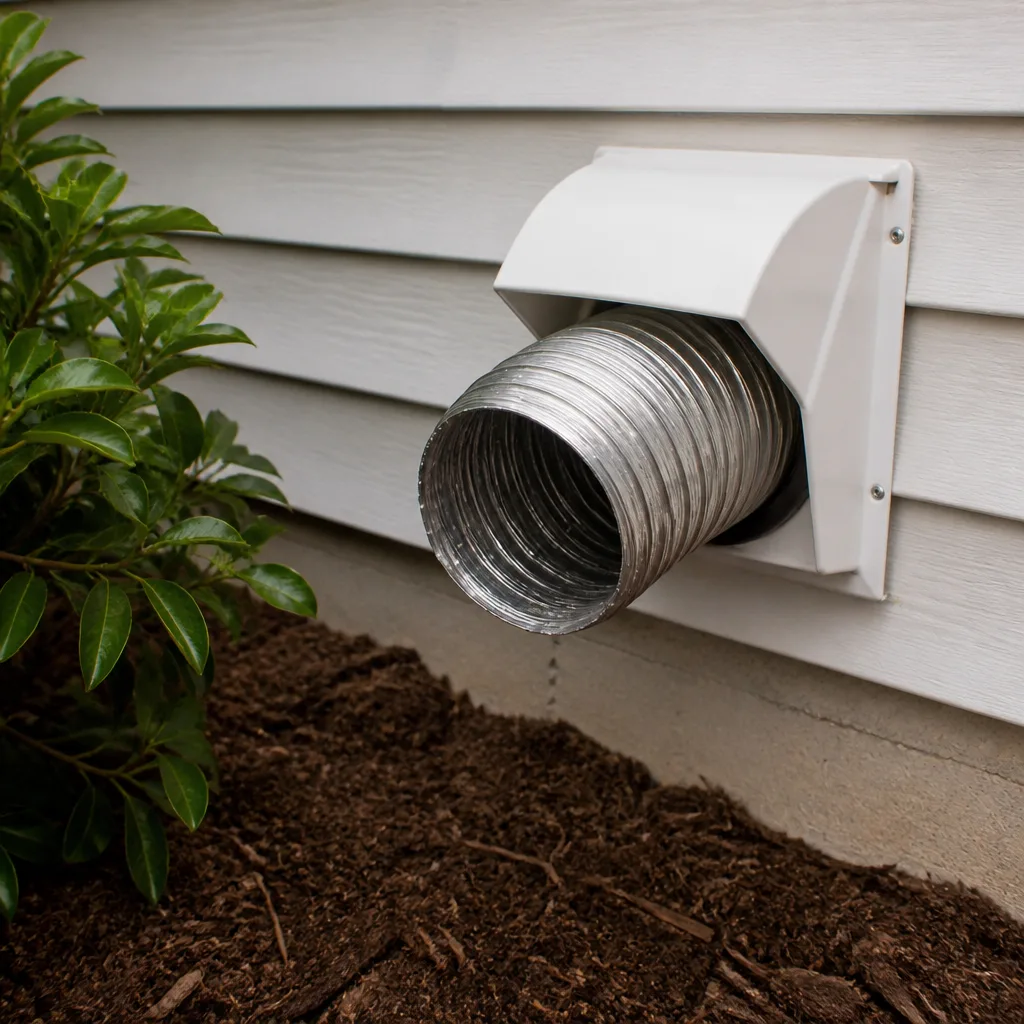 Dryer vent cleaning
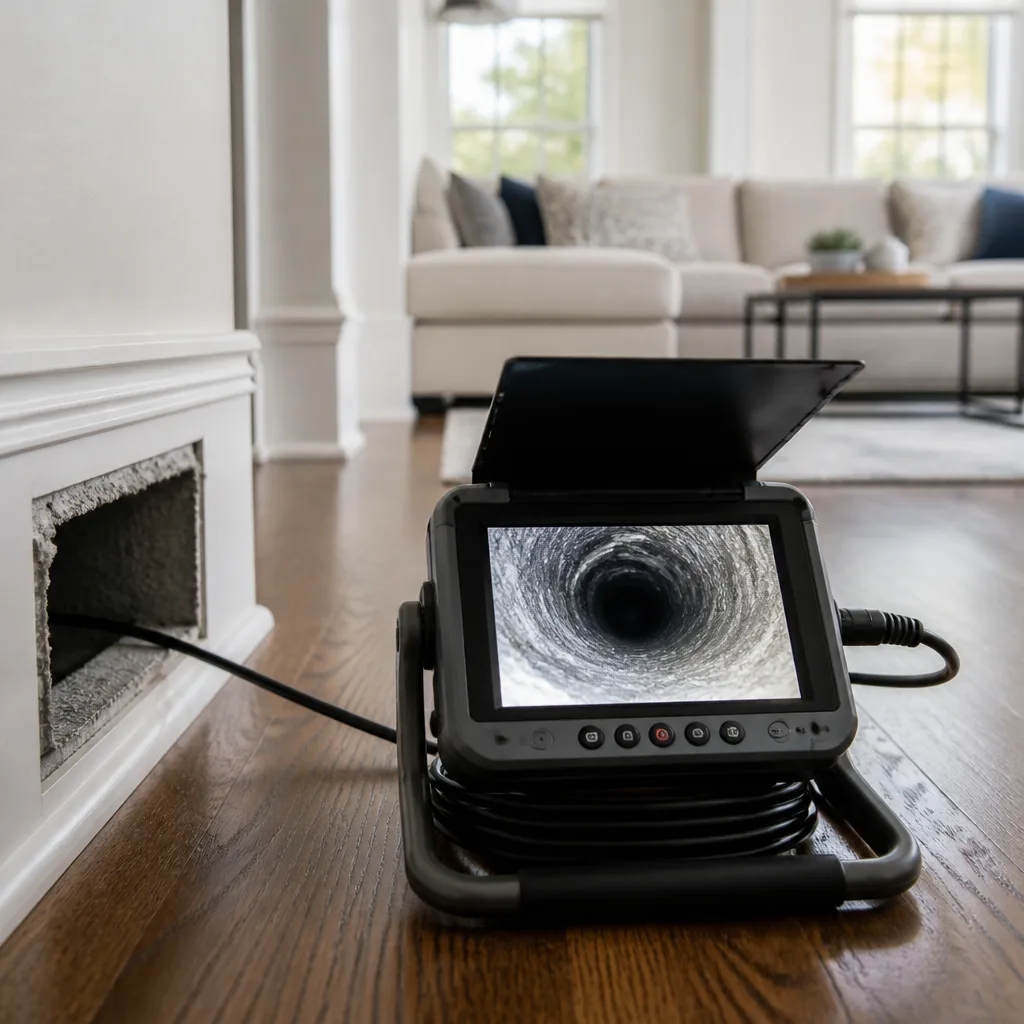 Camera inspection
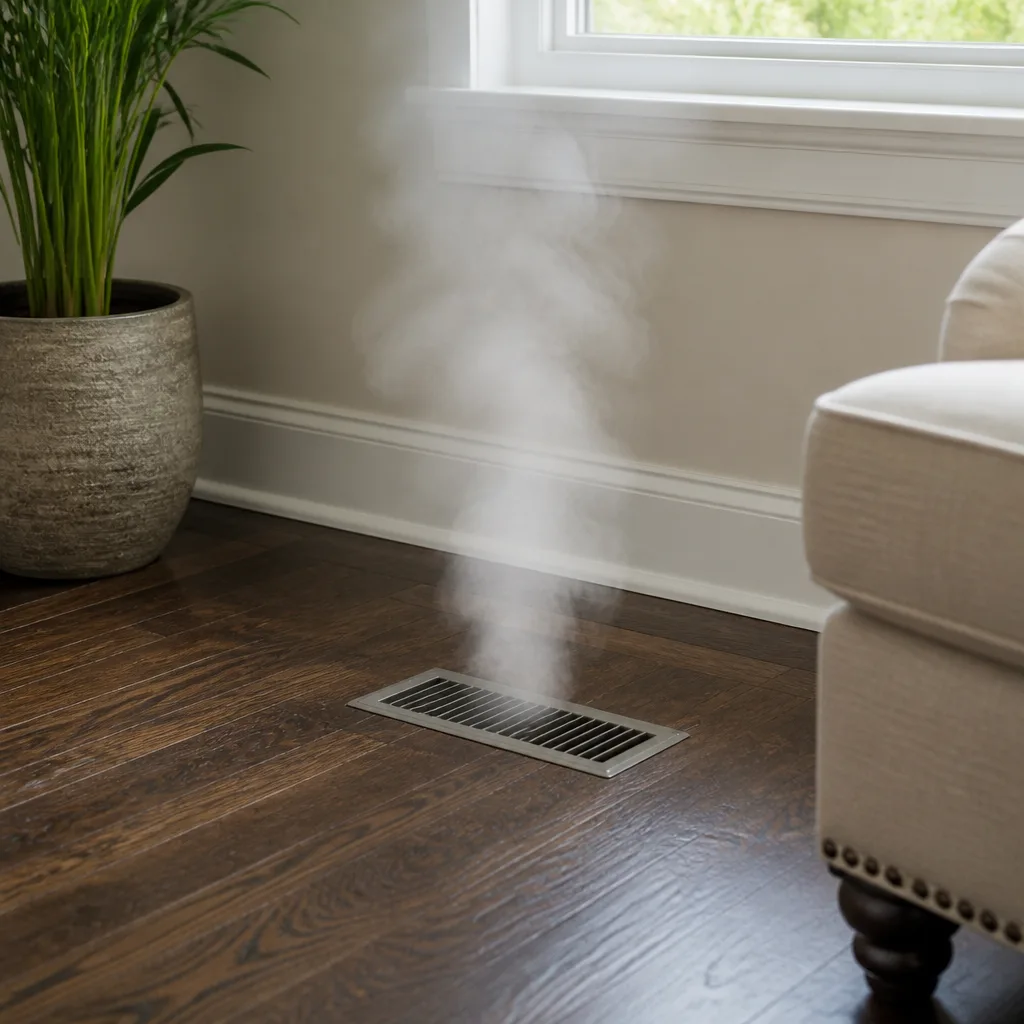 Sanitizing & deodorizing
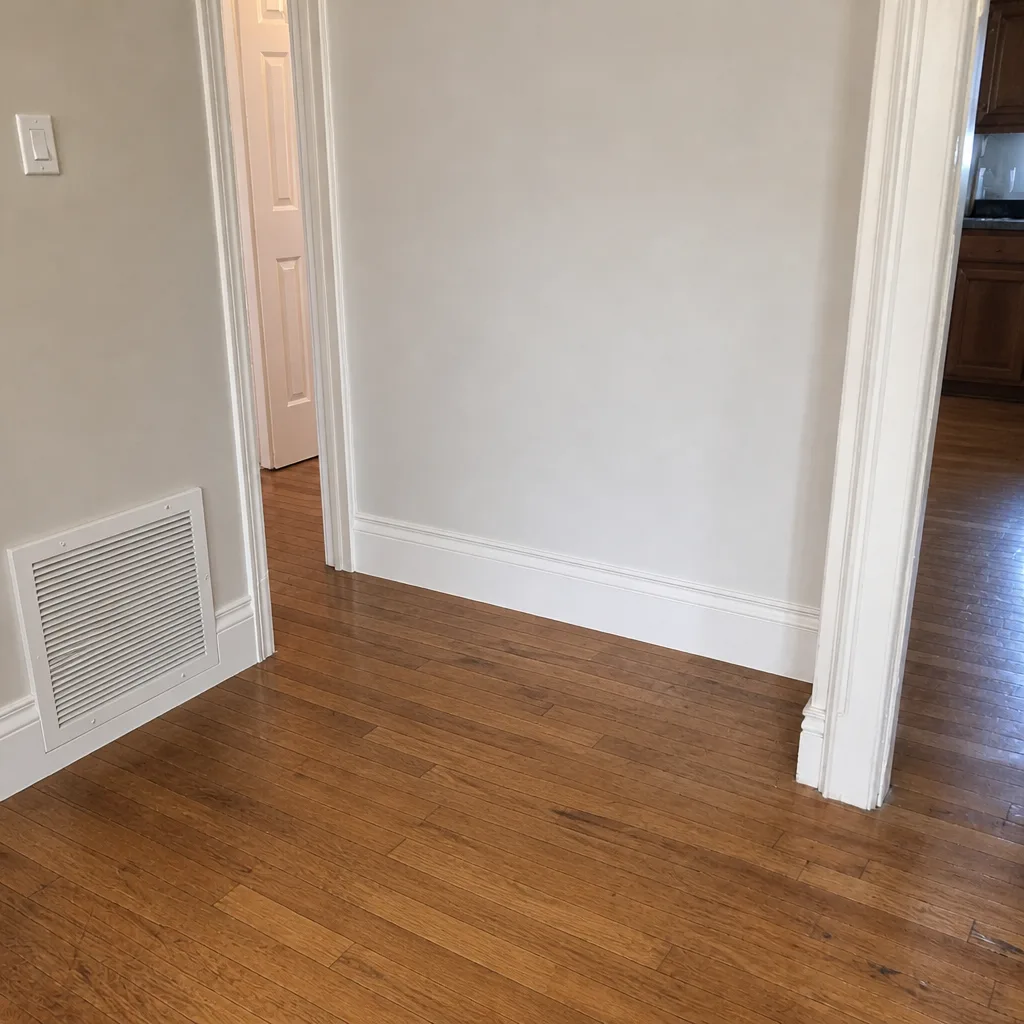
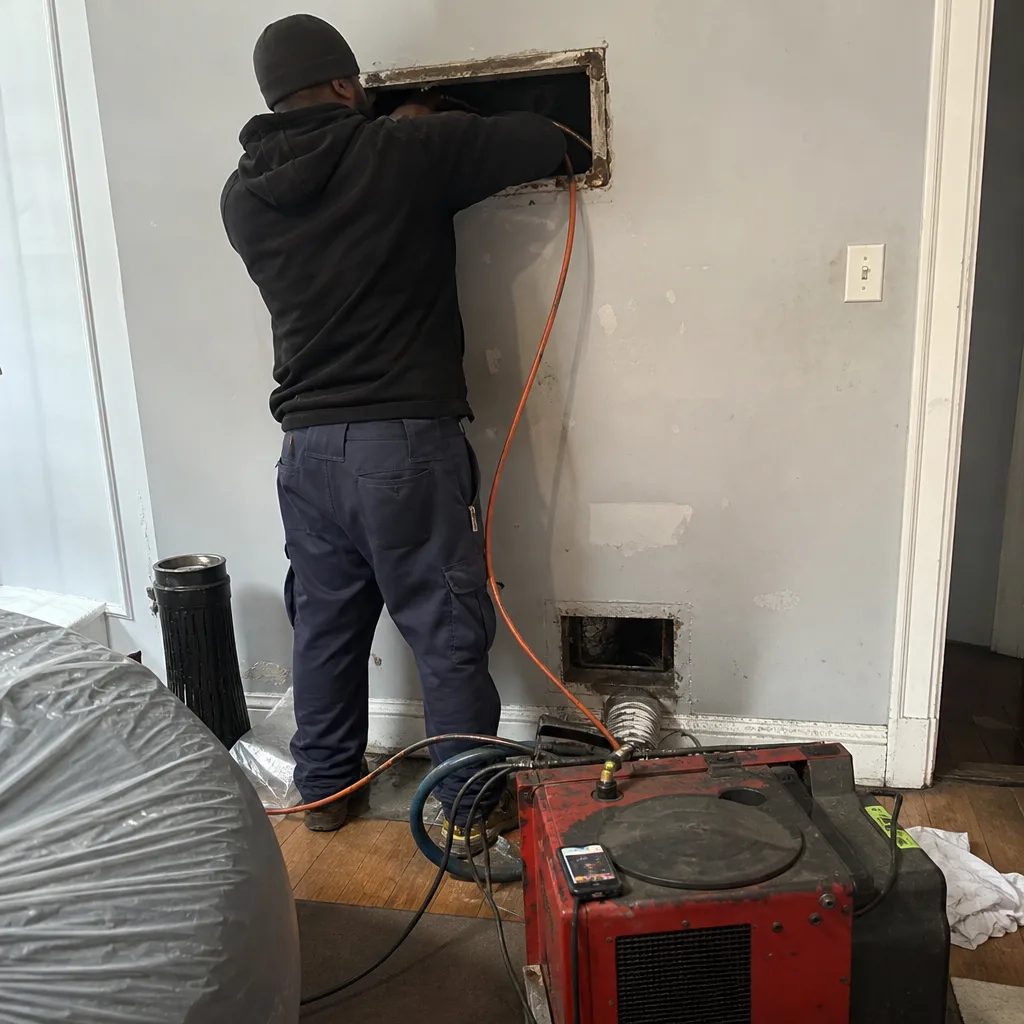
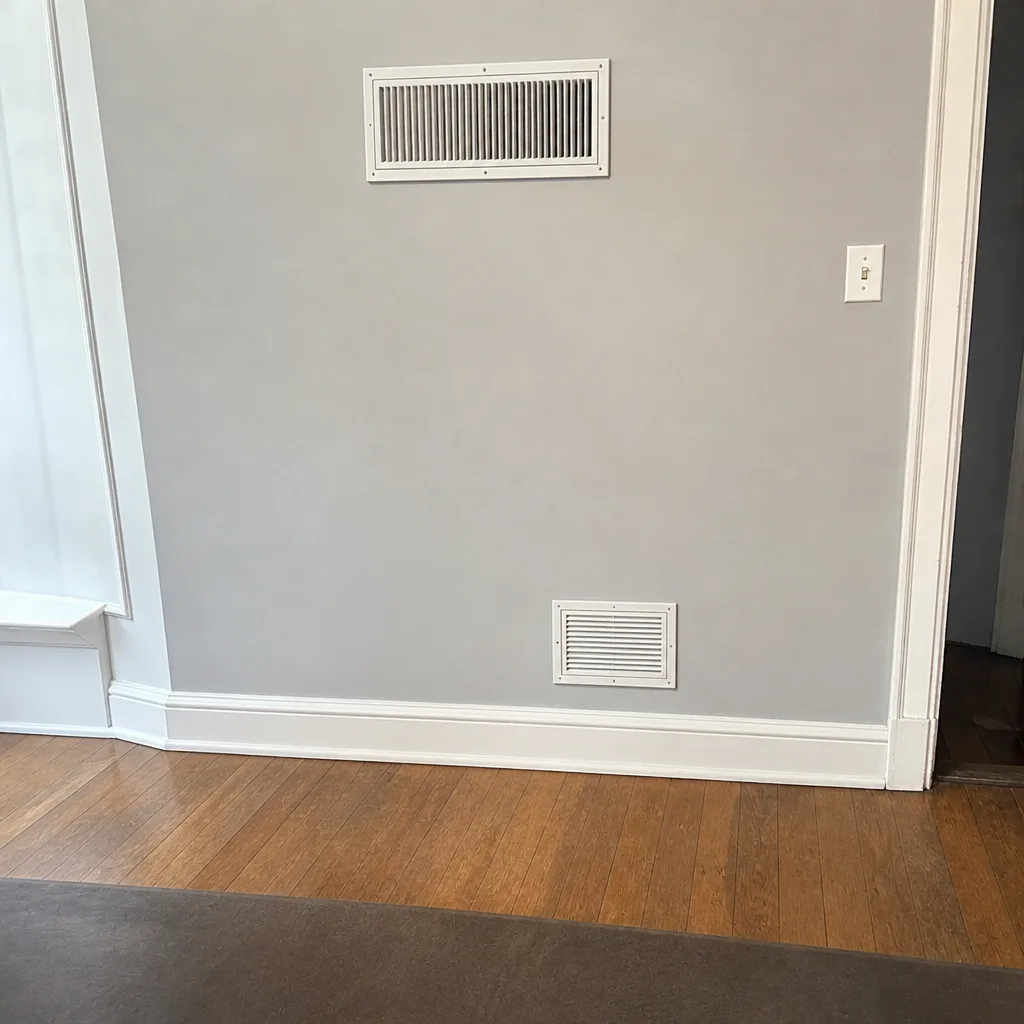
Whole-system duct and dryer vent check with before-and-after photos - you see exactly what came out of your vents
That "$99 whole-house special" is a bait ad - the real number appears once they are in your hallway, or the "clean" is a shop-vac at the register. We photograph the inside of your ducts before and after instead.
Air Duct Cleaning Maintenance Checklist for East Flatbush Homeowners
Your MERV-8 filter is trapping roughly 70 percent of the particles passing through it. The rest, the submicron particles, slips past the filter media and settles on the inside walls of your ductwork, and no amount of filter changing reaches it. That’s the part most maintenance advice ignores. The health of a duct system depends on housing stock, occupancy, humidity, and how the house was built – and East Flatbush has all of those in unusual variety, from pre-war walk-ups to 1960s brick semis to newer infill construction. This guide gives you a property-specific maintenance schedule: monthly, seasonal, and annual tasks built around how residential ductwork actually degrades. You’ll learn what to check, when to check it, and how to schedule cleaning predictively instead of reactively.
Quick Answer
A homeowner maintenance checklist for air ducts should include monthly visual checks at supply and return registers, filter replacement with dates logged against HVAC runtime, seasonal checks tied to heating and cooling cycles, and an annual inspection of the full system by a technician. Most East Flatbush homes need a professional duct cleaning every three to five years, but homes with pets, recent renovation work, or high occupancy may need it sooner. The schedule below reframes maintenance as a predictive cycle driven by your household’s specific conditions, not a fixed calendar.
Styles & brands we work with
- Whole-home duct cleaning
- Dryer vent cleaning
- Camera inspection
- Sanitizing & deodorizing
Table of Contents
- Monthly Visual Checks at Your Registers
- Building a Filter and Runtime Log
- Seasonal Tasks for East Flatbush Conditions
- What to Check After Renovation or Construction
- Warning Signs That Mean Cleaning Now
- What an Annual Contractor Inspection Should Cover
- How to Schedule Cleaning Predicatively
- Common Mistakes to Avoid
Monthly Visual Checks at Your Registers
You don’t need tools or training to do the most important duct maintenance task in your home. Every month, walk to each supply and return register and look. That’s the whole job. But you need to know what normal looks like, because the difference between routine dust and a warning sign is thin, and most homeowners read it wrong in both directions.
Normal accumulation is a light, even film of gray dust on the louver slats and the surrounding trim. It builds up gradually between cleanings, and you can wipe it off with a damp cloth in a few passes. Surface dust around a register is unavoidable in an occupied home. It gets pulled toward the grille by the return, not expelled by it.
Warning signs look different. Watch for:
- Dark streaks radiating from the edges of a supply register onto the wall or ceiling, which usually points to air bypassing the boot seal.
- Visible dust puffs from a supply register when the system first starts, which suggests debris accumulated inside the branch run.
- Gray or black staining on the return grille finish that doesn’t wipe off with a general cleaner, which can indicate fine particulate buildup that needs professional attention.
- Any musty or stale smell at a register when the blower runs.
- Uneven accumulation – one or two registers loading up much faster than the rest – which often signals a balance or leakage problem rather than dirty ducts.
In East Flatbush’s older housing stock, register condition varies widely, and a register that hasn’t been removed and cleaned behind in many years is a common source of visible loading. The visual check is the front line of the checklist. Do it in five minutes and note anything that changes month to month.
Building a Filter and Runtime Log
Filter replacement on a fixed “every 90 days” schedule is a rule of thumb that’s often wrong. A one-pet household running the system twelve hours a day loads a filter far faster than a two-person household with a well-sealed envelope. The filter’s clock should be set by how much air has moved through it, not how many days have passed. The way to build that feedback loop is a written log.
You don’t need software. A sheet taped inside the mechanical closet works.
- Record the date whenever you change the filter. Note the filter size and its MERV rating.
- Record the approximate hours the system runs per day in that period, using your thermostat’s runtime history if it has one, or an estimate based on the season.
- Note the condition of the old filter when you pull it out: light gray, evenly loaded, packed, or buckled.
- Compare the interval to the loading. If the filter is packed at 60 days, your replacement interval is 60 days, not 90. If it’s still light at 120 days, stretch it out.
- Track cumulative runtime between changes, not calendar time. After a few cycles you’ll have a reliable rule: this filter in this house lasts about X hundred operating hours.
That log does a second job most homeowners miss: it tells you when duct conditions are degrading faster than expected. A filter that used to last 90 days and now packs at 45 is telling you something has changed – a cracked return duct, a blower issue, or a building envelope leak pulling unfiltered air in. Runtime tracks compare directly to what a technician sees during inspection, which turns a “we dust every couple of months, probably time for a cleaning” conversation into a data-driven decision. Honeywell and Aprilaire filter cabinets and media upgrades are worth asking about if your existing setup loads fast, because a deeper filter media holds more before it cakes over.
Seasonal Tasks for East Flatbush Conditions
East Flatbush runs through two distinct duct stress seasons, and each one leaves deposits the other doesn’t. Working the calendar to those two cycles is more useful than treating maintenance as weather-neutral.
Post-winter heating season
The radiator and forced-air heating season leaves a specific residue: combustion byproducts if there’s any gas-fired equipment in the envelope, dry cellulose-based dust from heated trim and finishes, and lint that migrates through the return network. After the heating system runs its final cycles in spring, do a pass through each register and look specifically at the return grilles, which collect the heaviest dust load. Any filter that ran all heating season should be changed out at the season’s end. It’s an efficient marker. And it’s the moment to note in your log whether the post-heating filter loaded more heavily than last year’s.
Summer humidity and condensate risk
Curing season in East Flatbush is sticky, and running air conditioning through flex duct runs in an unconditioned attic or crawl means condensation forms on the duct jacket where it’s cold and the surrounding air is humid. Wet flex duct jacket lining is a genuinely bad outcome. Condensation drips, the insulation wets, and the interior lining can grow mold. Walk these runs in mid-summer, or have someone walk them, and look for damp patches on the exterior vapor barrier, water staining on joists below the duct, and any sag where the duct jacket has lost tension. Flex duct that’s sagging, kinked, or missing support needs repair before the next cooling season, not just a cleaning. If your basement or utility room smells musty only in summer, that’s a duct condensation or drainage clue worth chasing before fall.
What to Check After Renovation or Construction
Drywall dust is the fastest way to clog a residential duct system, and it’s often invisible from the register side. Cutting, sanding, and taping drywall produces a fine gypsum powder that floats, and during renovations it gets pulled into return openings from anywhere in the house. Even if the contractor sealed registers, the seal rarely holds through the whole job. After any renovation that cut into walls, ceilings, or floors, do these checks:
- Inspect every return grille for fine white or gray powder that’s distinct from normal household dust.
- Remove the filter and look downstream with a flashlight into the return duct – if the interior shows drywall powder, no filter change will fix it.
- Run each zone separately for ten minutes after the renovation is finished, then check each supply register for grit or drywall dust blown out at startup.
- Change the filter immediately after the last day of finish work, and again after two weeks, since accumulation continues while the system runs.
- Book a professional cleaning if visible powder is present – the drywall dust gets into the whole branch network and can cause blower motor wear if left.
East Flatbush has seen steady renovation activity in its rowhouse and multi-family housing, so post-renovation duct cleaning is one of the most common scheduled jobs. Rotary contact systems like Rotobrush dislodge drywall dust and caked debris from duct walls more effectively than a vacuum alone, and if the renovation involved mold-prone materials, a contractor-grade air filtration unit is the right tool to run during the work.
Warning Signs That Mean Cleaning Now
Most homes fall somewhere between “clean” and “needs cleaning” for a long time. The transition is gradual, which is why a checklist catches it later than it should. Here are the specific signs that push you past the maintenance schedule and into a cleaning job.
- Visible dust discharge at startup from multiple supply registers when the blower kicks on.
- Allergy or asthma symptoms that flare indoors and improve when you leave the house. Family health context matters here: respiratory sensitivity to airborne particulates is a real reason to clean, and it’s the reason the equipment matters. Abatement Technologies filtration units are what remediation professionals use, and that’s the standard worth asking for.
- Persistent odors when the system runs – stale, musty, or smoky – which usually point to organic buildup on duct walls or in the filter housing, not just surface dust.
- Debris visible inside the duct when you remove a register and look in with a flashlight.
- Bills climbing without a usage change, tracking with uneven airflow, which points to restricted ducts.
- A recent renovation, pest activity, or water intrusion that touched the duct system.
If two or more of these are true, skip the schedule and book an Air Duct Cleaning East Flatbush inspection. The full job involves cleaning, sealing, and sanitizing as separate steps – a vacuum-only visit leaves the problem half-solved.
What an Annual Contractor Inspection Should Cover
Here’s a fact the schedule above doesn’t tell you: in many years a full duct cleaning isn’t warranted, but an annual inspection still is. The inspection is diagnostic. It’s how you find the leaks, disconnected joints, and balance issues that a cleaning job would just leave in place. What should a technician actually check in a year when you don’t clean?
- Duct integrity at accessible joints and seams. Disconnected flex duct collars and gaps in hard-pipe seams are common and directly waste conditioned air.
- Filter condition and cabinet seal. A gap around a Honeywell or Aprilaire filter cabinet door lets unfiltered air bypass the media entirely.
- Register and boot alignment. A boot that’s pulled back from the wall or ceiling leaves a gap that dumps air into the wall cavity.
- Condensate and moisture evidence at the evaporator coil and anywhere duct runs through unconditioned space.
- Blower and coil condition on the air handler, since a dirty coil and blower will degrade airflow just as surely as duct debris.
- Return air adequacy and balance. Undersized returns are a chronic cause of poor airflow in older homes and are repairable, not just a cleaning issue.
An inspection that ends with a duct-leak survey and a written recommendation is more useful than one that ends with a sales pitch. Duct repair and sealing is a core service, and the right time to catch a leak is before you’ve paid to clean a system that isn’t airtight from the start.
How to Schedule Cleaning Predictively
The standard industry interval is three to five years for most homes, and shorter for homes with pets, heavy occupancy, recent renovation, or chronic allergy complaints. That’s a legitimate starting point, but predictive scheduling means adjusting the interval to your specific property, not adopting the default.
Your inputs are the filter log, the runtime estimate, occupancy, pet count, whether any renovation has occurred, and the condition you note at the registers each month. From those, build a schedule that looks like this:
- Baseline cleaning every three to five years for an average household with no pets and no renovations.
- Every two to three years for homes with indoor pets, high occupancy, or a family member with respiratory sensitivity.
- Right after any renovation that produced drywall dust or worked on ducts, regardless of schedule position.
- An inspection every year, even when a cleaning isn’t due, so the interval can be adjusted based on what’s actually observed.
East Flatbush housing varies enough that “average household” only gets you in the neighborhood. Larger multi-family and mixed-use properties often have longer trunk runs and shared returns that hold more debris, which shortens the practical interval. Detached single-family homes with shorter runs tend to hold their interval longer. Predictive scheduling is what lets you price and plan rather than wait for a symptom to signal the cleaning for you.
Common Mistakes to Avoid
- Treating the filter as the whole story. A new filter traps a fraction of what passes through, and the submicron particles that get past it are the ones coating the ducts. Filter replacement is maintenance, not cleaning.
- Assuming a cheap one-step visit is enough. A vacuum-only job pulls loose material out and leaves the ducts half-addressed. Ask whether cleaning, sealing, repair, and sanitizing are included, because they’re separate work.
- Ignoring a renovation in the schedule. In East Flatbush’s renovating stock, drywall dust enters the return side and gets distributed. Book cleaning immediately after any wall or ceiling work, not on the next calendar cycle.
- Skipping the summer moisture walk. Condensation on flex duct runs in older East Flatbush attics and utility spaces doesn’t announce itself; catching damp jacket lining early is cheaper than rebuilding the run.
- Judging dust at the register only by whether it “looks dirty”. Streaking and puffing indicate leakage, and a register that’s clean doesn’t prove the branch behind it is.
- Not asking what equipment will be used. A shop vacuum isn’t the same as a rotary contact system like the Rotobrush or Nikro equipment that professional contractors use. Ask before you book.
- Booking cleaning but not an inspection. If the system has disconnected joints or leaks, a cleaning without sealing means the debris will return faster. Full service means fixing the cause.
See the difference
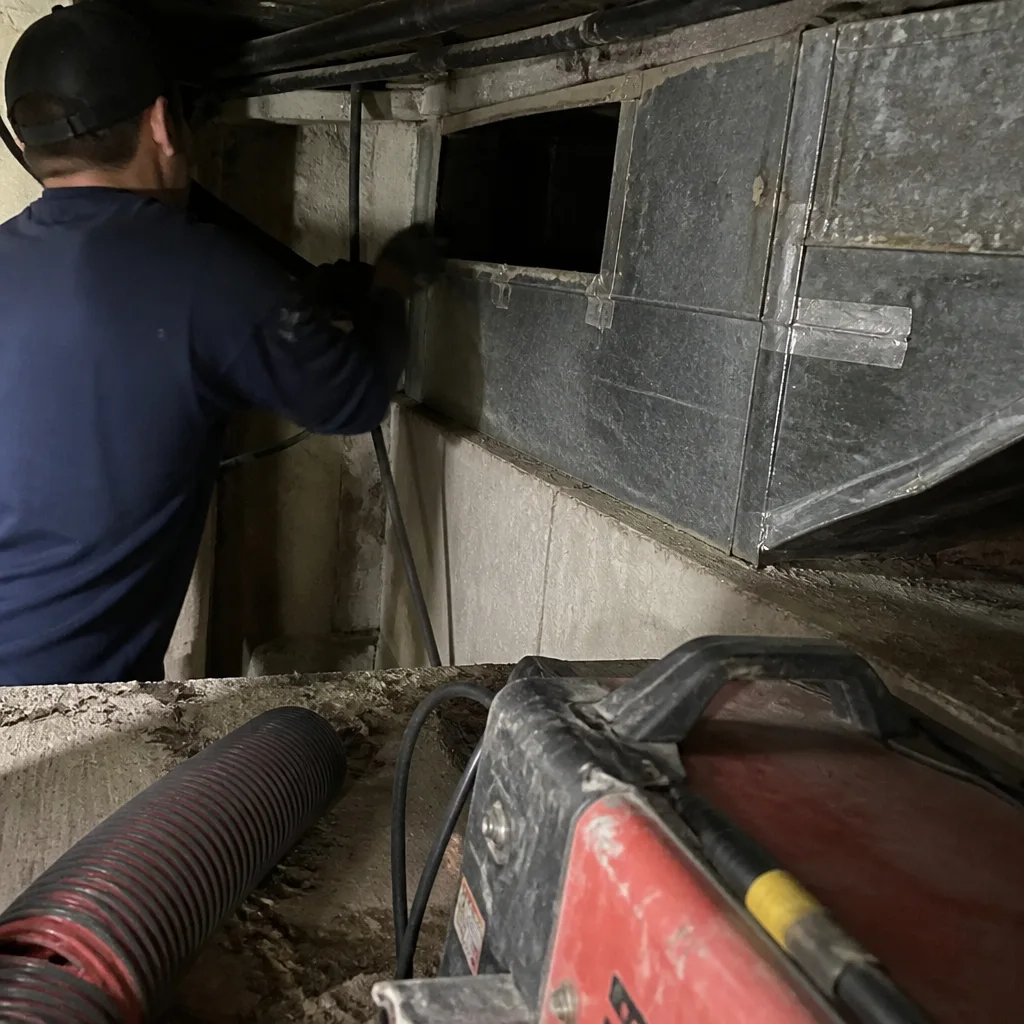 Before
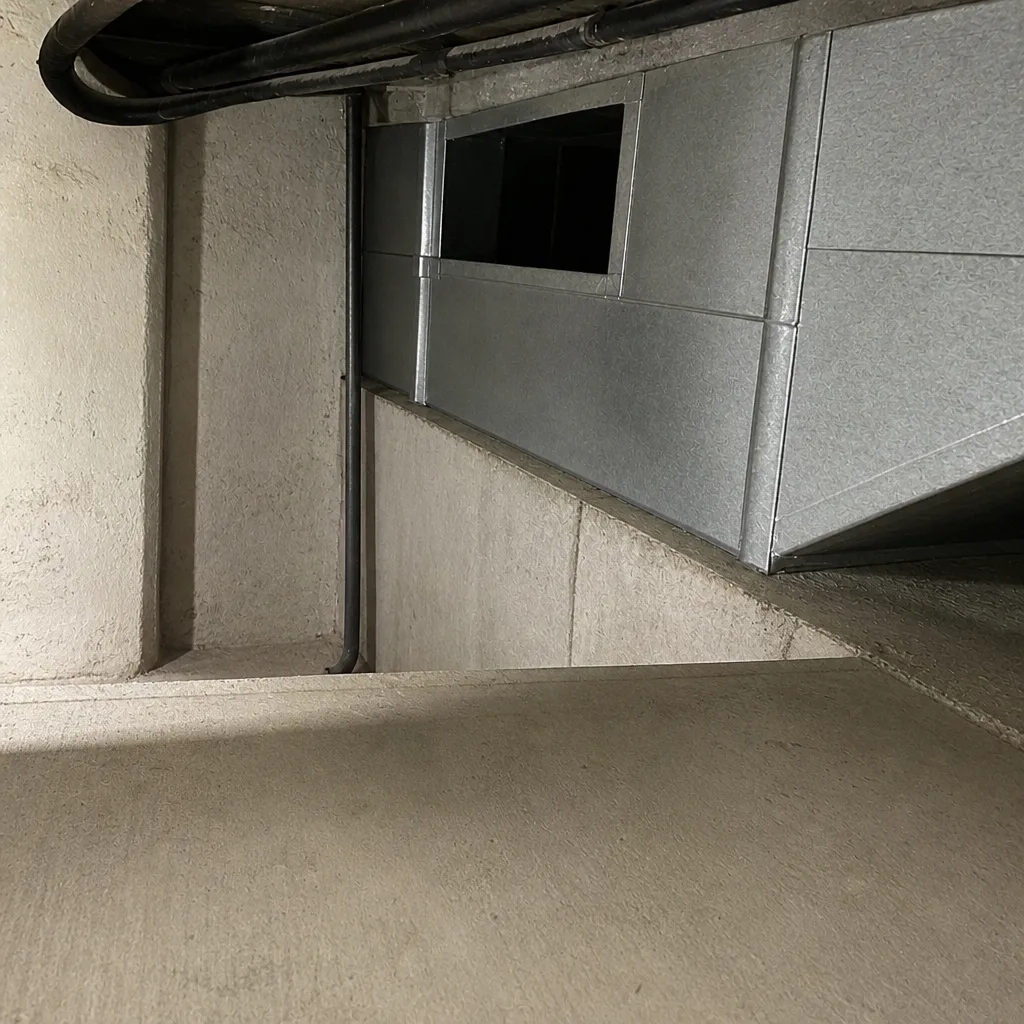 After
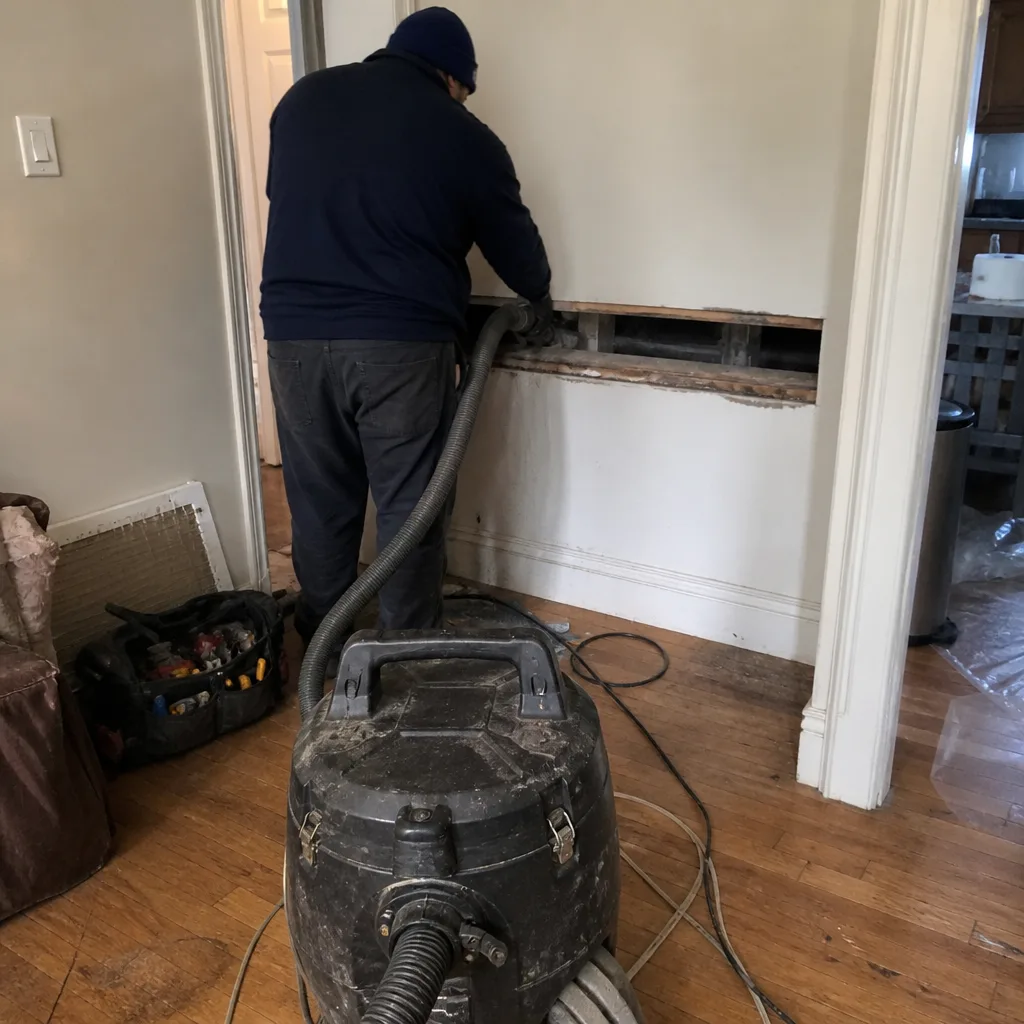 Before
 After
 Before
 After
When to Call a Professional
Your monthly checks catch a lot. Bring in a technician when you see: visible dust or debris inside a duct, powder or grit after a renovation, musty odors at a register, uneven accumulation across registers, persistent allergy symptoms indoors, or a bill climb you can’t explain. These are visible evidence a technician can diagnose, not a scheduled job. Once a year, a technician should survey the system even if cleaning is a year or two away, because duct repair and sealing – not cleaning – is often what the system actually needs. Air Duct Cleaning East Flatbush offers free estimates in East Flatbush for homeowners who want a fact-based recommendation. Call (844) 484-4185. We answer 24/7. Fast dispatch from 7am to 7pm, Sunday through Friday.
Frequently Asked Questions
Every three to five years for most homes, and every two to three years for homes with pets, high occupancy, recent renovation, or respiratory sensitivity. Predictive scheduling means adjusting that based on your filter log and inspection findings, and it beats waiting for a symptom to trigger the cleaning. Call (844) 484-4185 for an exact recommendation – estimates are free.
Air duct cleaning in East Flatbush is priced per system by written estimate, and the estimate states the whole-system cost before any work starts. Whole-system pricing means one flat price per system, never a per-vent charge, and it includes the cleaning, sealing, and sanitizing steps you agree to. Skimpy quotes advertise a low per-vent price and grow into a much larger invoice once the technician is on site. Call (844) 484-4185 for an exact quote – estimates are free.
Ask for before-and-after photos of your own ducts, and insist on the full scope: rotary contact equipment that dislodges and extracts debris, sealing of any joints found open, and a written summary of what was found. A technician should be doing the work with professional equipment like Rotobrush, not a shop vacuum, and the photos should be of your registers and ducts, not stock images. Call (844) 484-4185 and ask for the photos to be part of the job.
Cheap quotes are usually per-vent or per-register pricing, they pull loose dust only, and they don’t include sealing or sanitizing. A thorough job includes extraction equipment and, where needed, air quality components like Honeywell or Aprilaire filtration. If you want a written scope and a flat per-system price, call (844) 484-4185 – estimates are free.
Yes, immediately after the renovation and again once the fine drywall dust settles, because powder enters the returns and distributes through the branch network. Standard maintenance interval is a fine baseline, but a renovation overrides it. Call (844) 484-4185 if your renovation closed out recently.
You can and should handle the monthly register checks, filter changes, and the runtime log. Removing registers to inspect duct interiors is safe; opening joints or cleaning interior duct runs is not, because a leaking or damaged system can distribute contaminants. Anything that touches duct repair, sealing, or interior cleaning is a technician job. Call (844) 484-4185 when you see a warning sign – estimates are free.
The Bottom Line
A duct maintenance checklist is a property-specific schedule, not a fixed calendar. The four jobs that matter are monthly register checks, a written filter and runtime log, seasonal walks tied to East Flatbush heating and humidity, and an inspection after every renovation. The rest of the schedule is prediction: use what your log and inspections observe to set your cleaning interval and repair anything found before it becomes a recontamination problem. Clean ducts are only half the job, and the maintenance you do between cleanings is what keeps them that way. If you want the full system – cleaning, repair, sealing, and sanitizing – one flat price per system is how it should be priced, with a written estimate before work starts.
We use professional equipment like Rotobrush and Nikro, and we can upgrade filtration with Honeywell and Aprilaire components in the same visit when the system needs it. Call (844) 484-4185. We answer 24/7. Fast dispatch from 7am to 7pm, Sunday through Friday.
Written by the team at Air Duct Cleaning East Flatbush.